
Filter
24 products


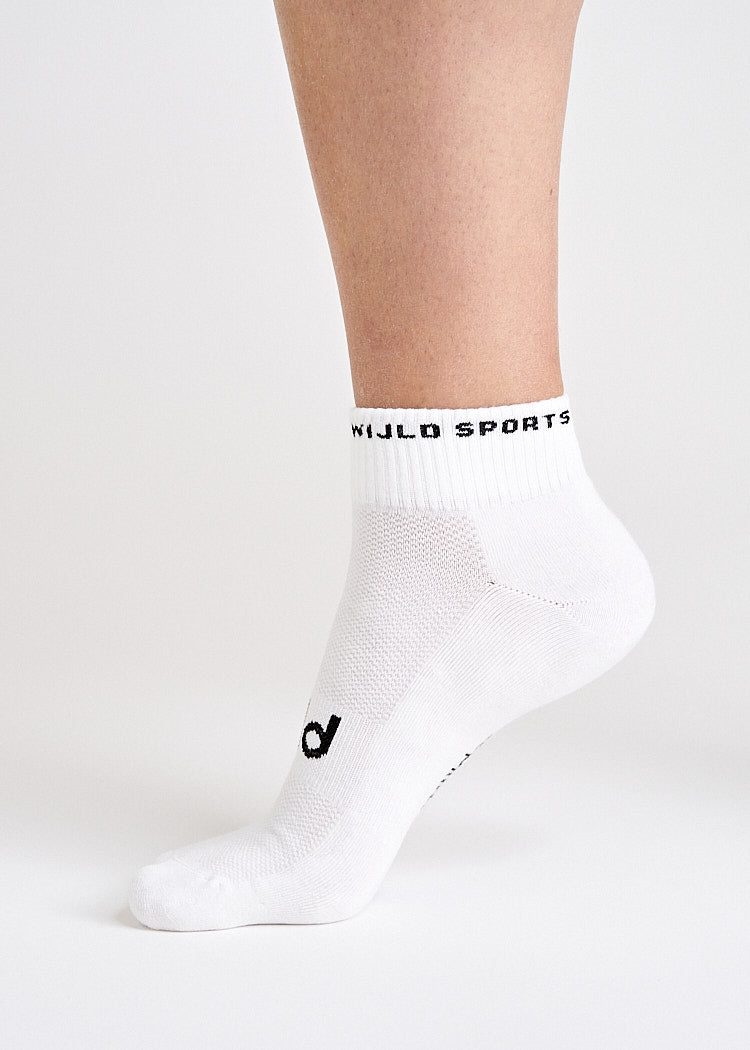
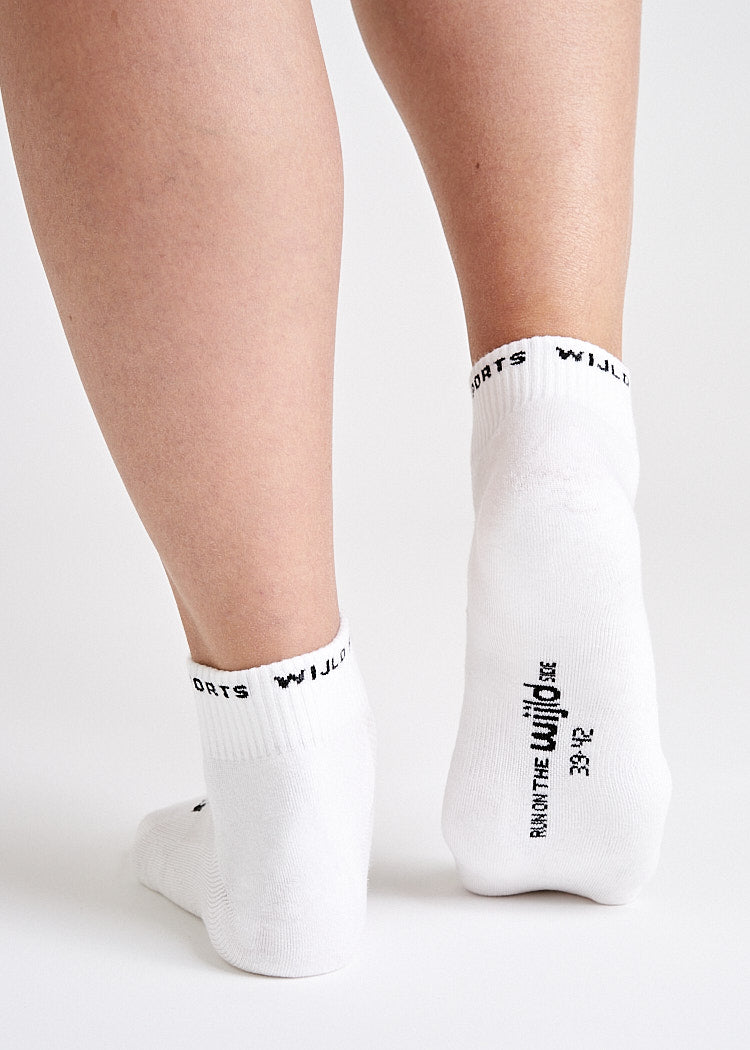


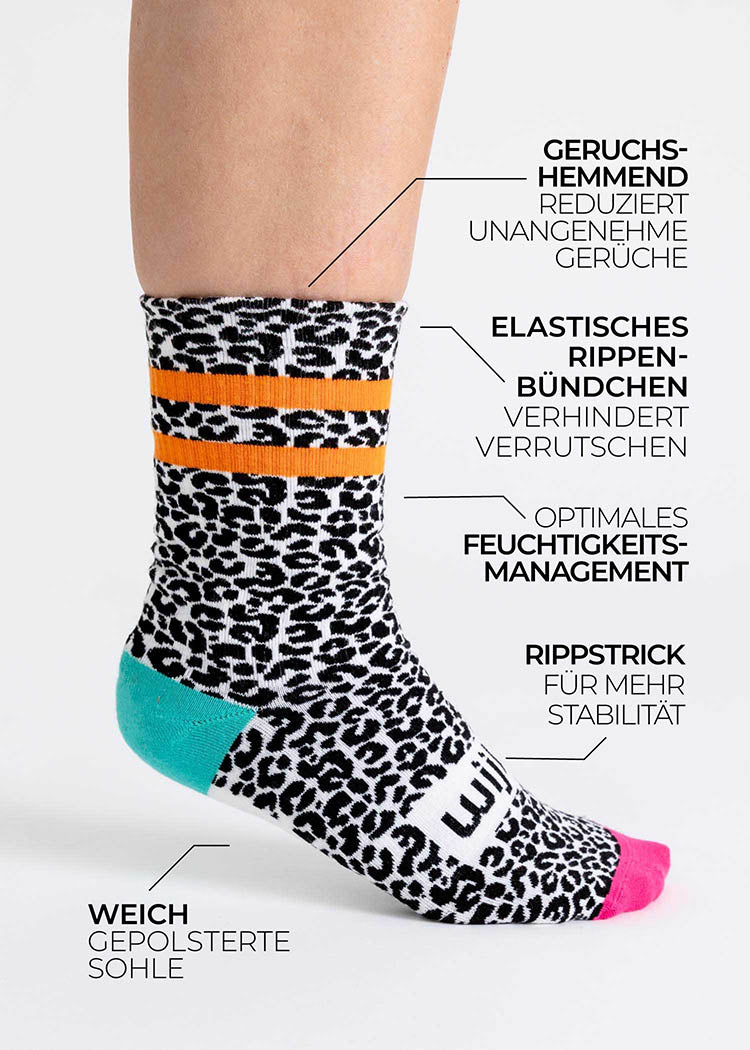


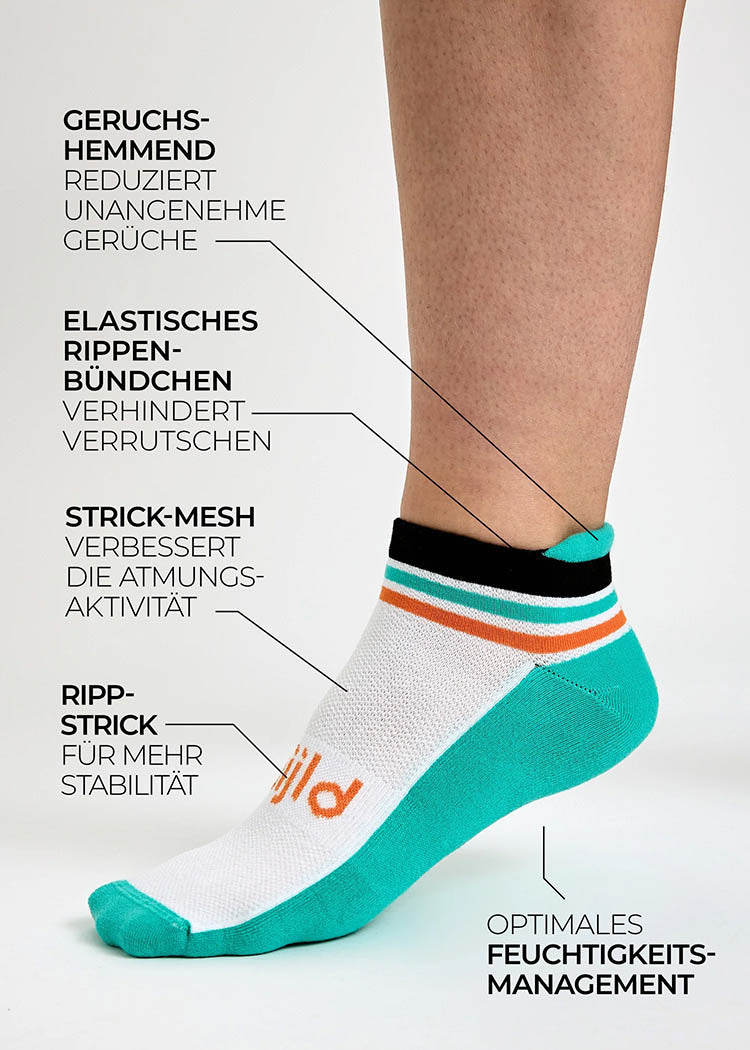

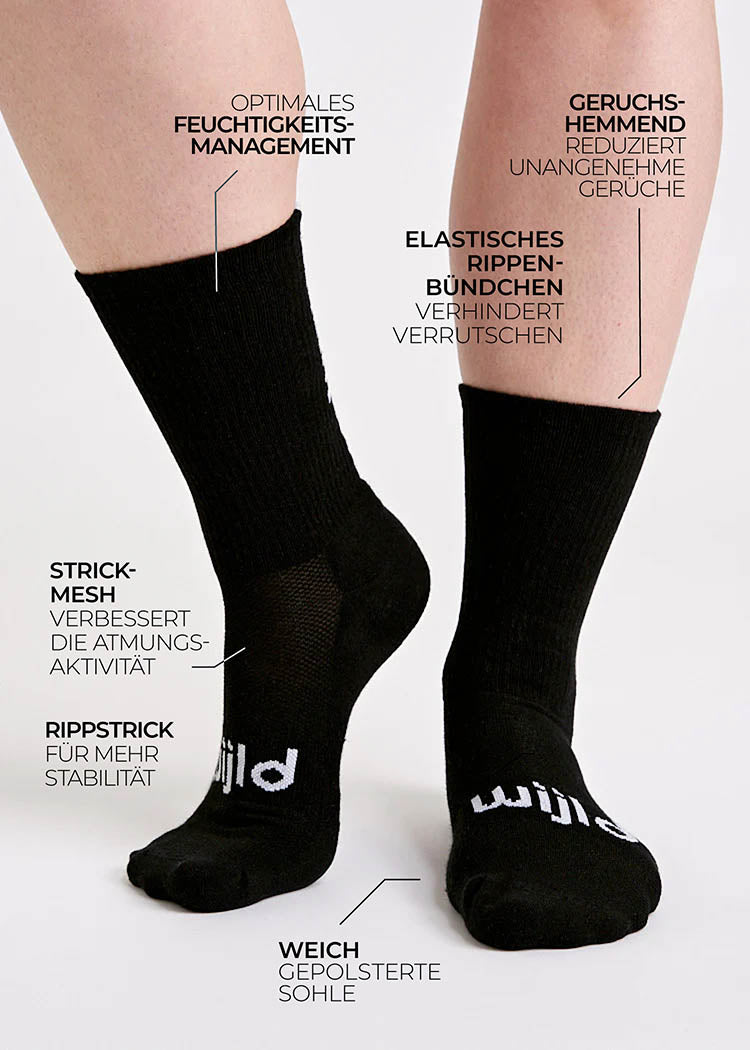

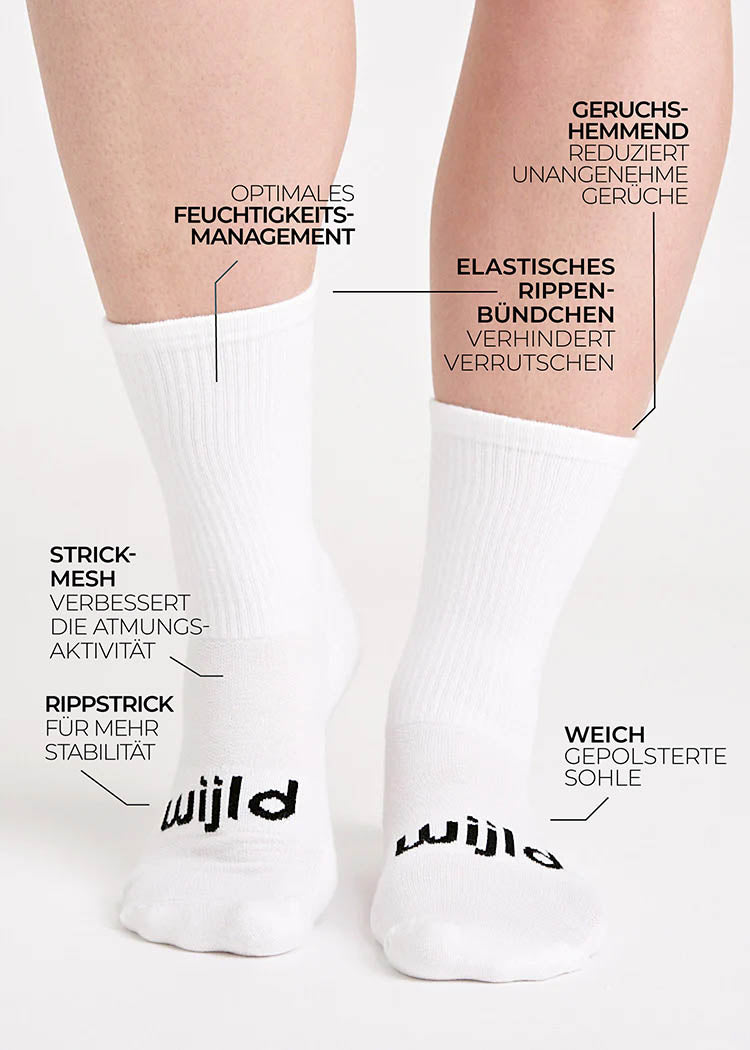








Sustainable women's sports socks in various styles and colors with unmatched comfort.
Sustainable sports socks are an important part of every athlete's gear, as they not only increase comfort but can also prevent injuries and pressure points.
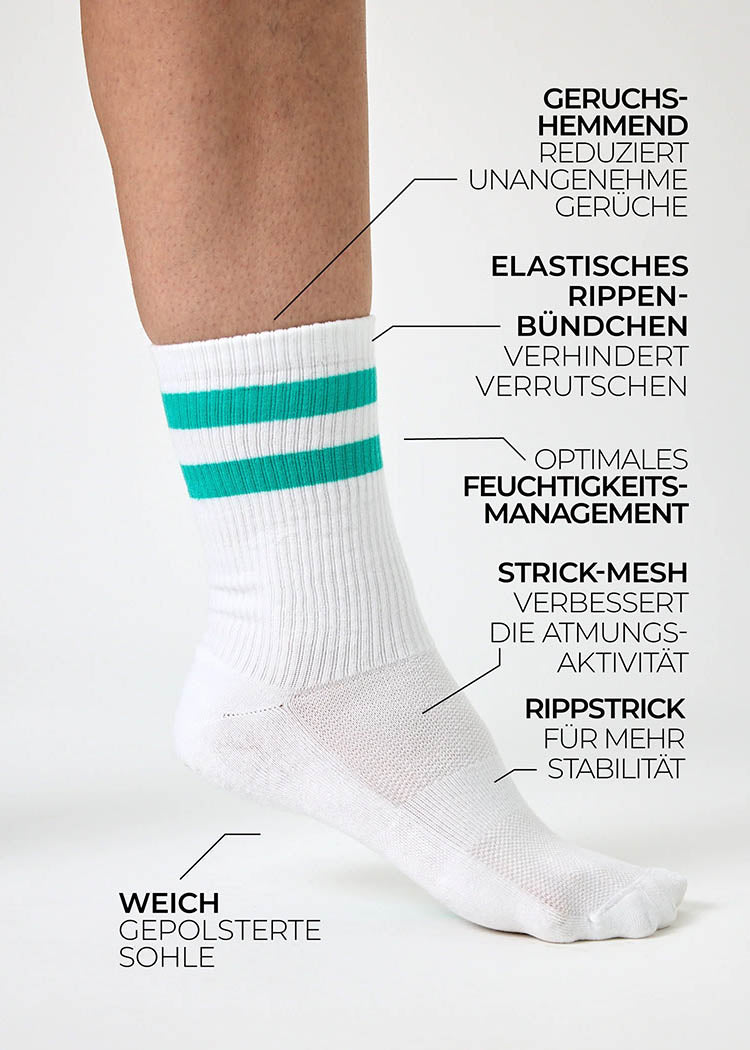
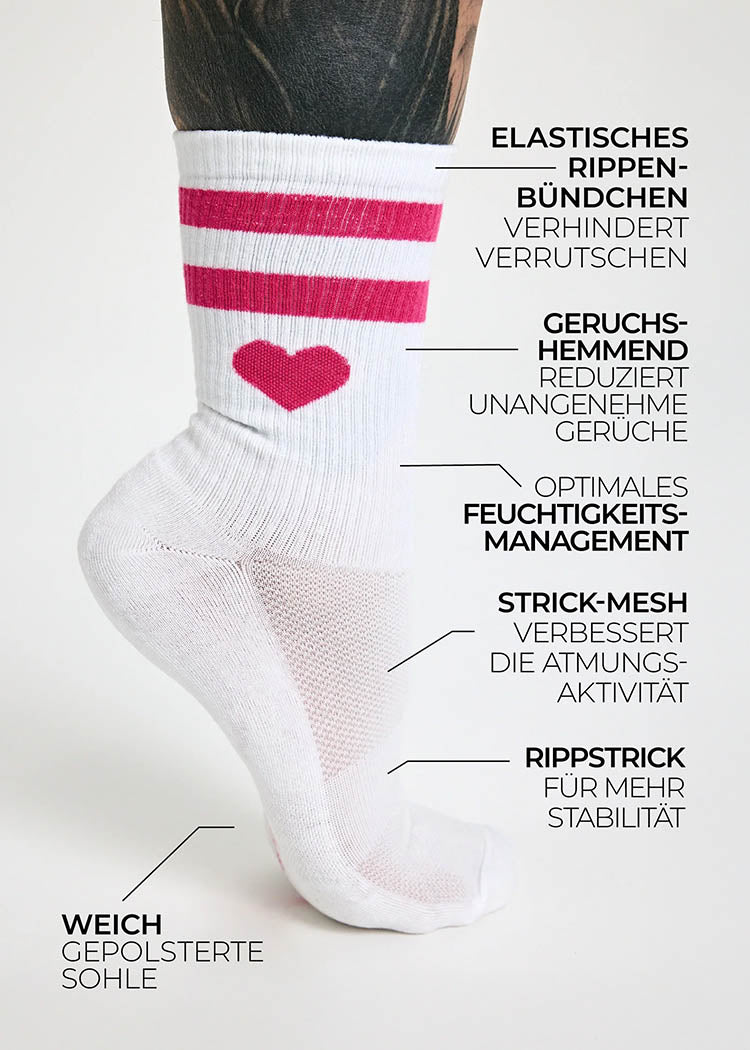
Our specially made-from-wood sports socks from wijld include all the benefits that a sports sock already offers, plus the following:
-
No unpleasant odors:
Our women's sports socks stay fresh longer because they inhibit bacterial growth. Comparing synthetic materials, cotton and our wood fiber shows that synthetic materials have 100 to 1,000 times more bacterial growth, and growth on cotton is still 10 times higher than on our wood-derived fabric.
-
Perfect ventilation:
Our sports socks made from wood can absorb moisture significantly faster than cotton or polyester. The maximum absorption capacity within 20 seconds is an impressive 380% for wood fibers, while for cotton and polyester it is just 16 to 19%.
-
Exceptional comfort: The wood fibers in our sustainable sports socks have an especially skin-friendly, smooth surface that feels gentle against the skin instead of irritating it. In short, they cause less friction on the skin, making clothing made from wood feel like a second skin.
Fairness in sports and fairness in the production of sustainable women's sports socks
No matter which sport you play or what you choose to use our sustainable women's sports socks for, they'll never let you down when it comes to comfort or durability. Along with the sporting motivation, you should always consider sustainable manufacturing when choosing your sports gear. Because for us, fairness matters not only in sports, but also in the production of each individual sports item.
That's why, as with our other collections, we gave sustainable manufacturing just as much importance as the quality of the eco-friendly sports socks that came out of production.
How you help save water, for example, by buying our sports socks
With just one pair of sustainable socks, you save several hundred liters of water compared with cotton socks. This is partly thanks to efficient manufacturing, but also because, unlike cotton, which needs a lot of water to grow, trees don't need artificial irrigation.