

If you’re wondering how wood becomes a T-shirt, you’ve come to the right place. At first, most people find it difficult to imagine that it’s even possible to make clothing from wood. And if they can, many picture clothing that is stiff or extremely scratchy.
So now we want to reveal this secret and take you behind the scenes. We’ll show you how and where this environmentally friendly and surprisingly soft fabric, with its unique comfort, is made.
Looking more closely at the clothing industry in recent years, it becomes clear that two raw materials form the basis of today’s textile production: polyester and cotton.
More than 60% of all fibers used worldwide for clothing are made from synthetic, petroleum-based raw materials. Approximately 25% of the fibers are made from cotton, with organic cotton accounting for only around 1% of that share. The remaining 15% of fibers consist of wool, cellulose-based fibers, and other natural fibers such as hemp and linen.
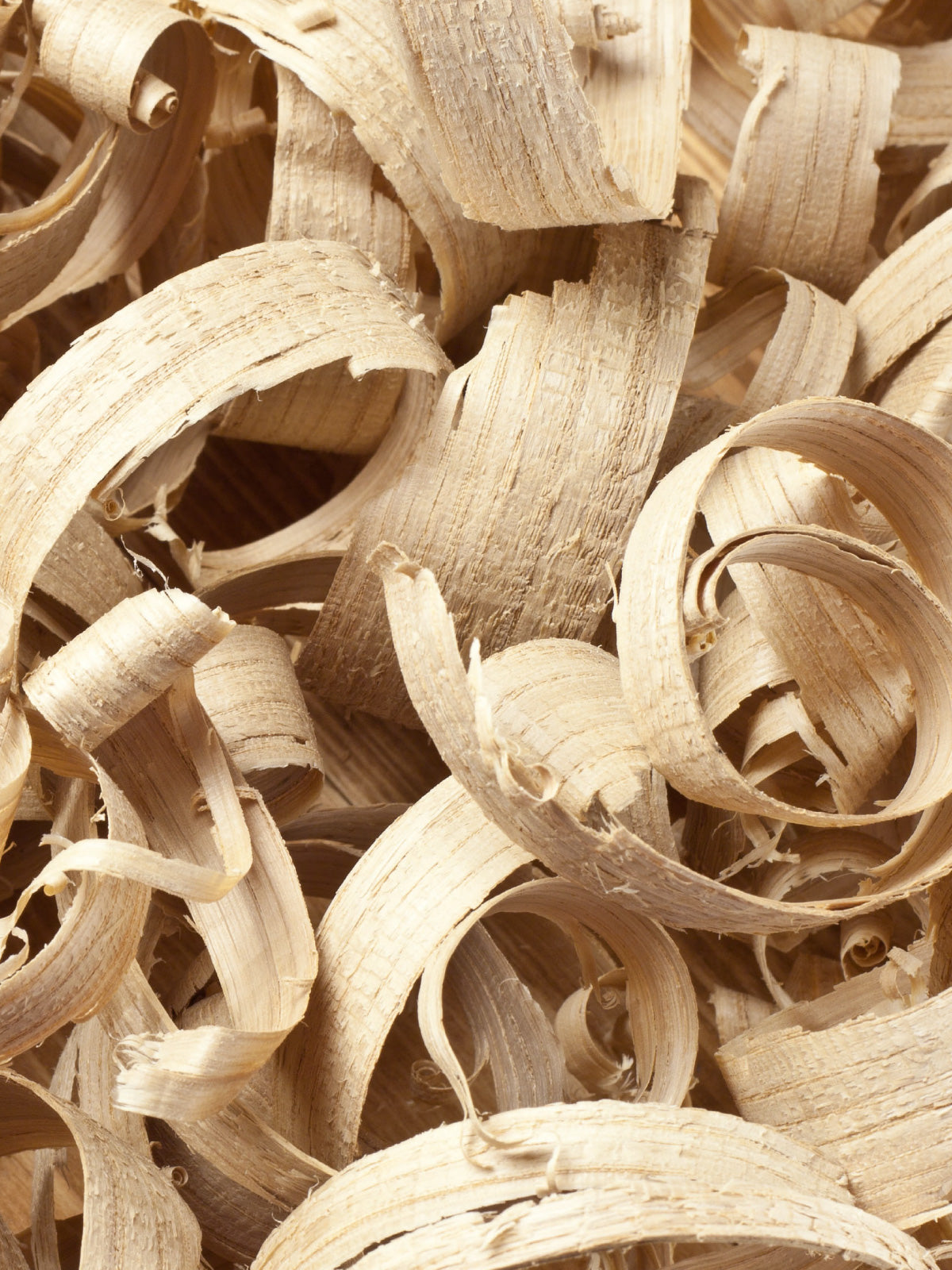
In the first step, the wood is processed into small chips and mixed with an organic solvent so that the cellulose dissolves. Because it mixes well with water, this solvent can be recycled again and again.
After this first step, you have a honey-like mass, which is then pressed through spinnerets to produce fine fibers. The fibers are subsequently dried and ultimately processed into the yarn that is knitted into the fabric of your T-shirt.
What we particularly like about this production step is that the entire process is a closed loop, which drastically reduces resource consumption and emissions.
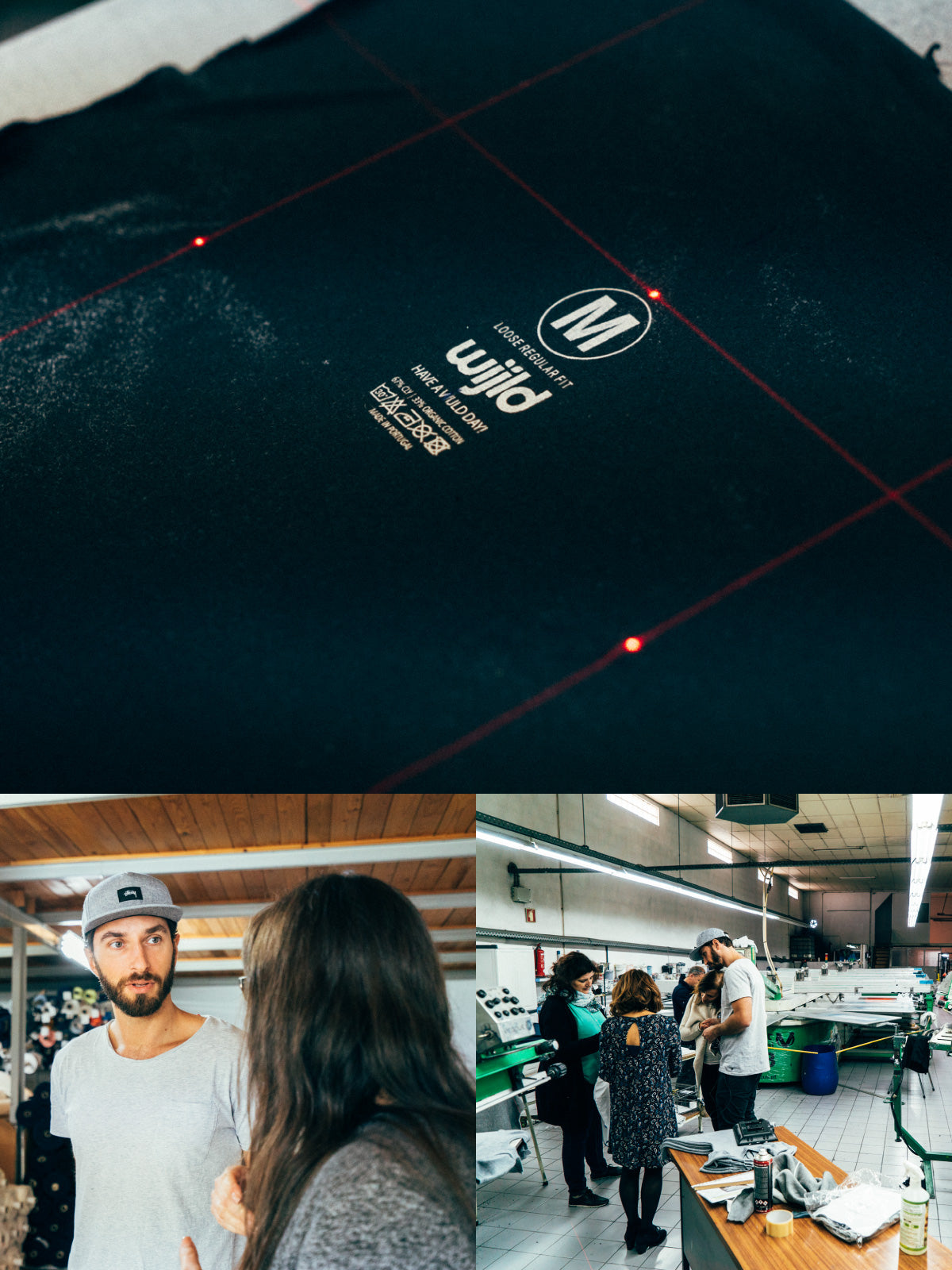
Once the fabric is finished, it passes through various small workshops, where it is further processed with a great deal of handwork and attention to detail.
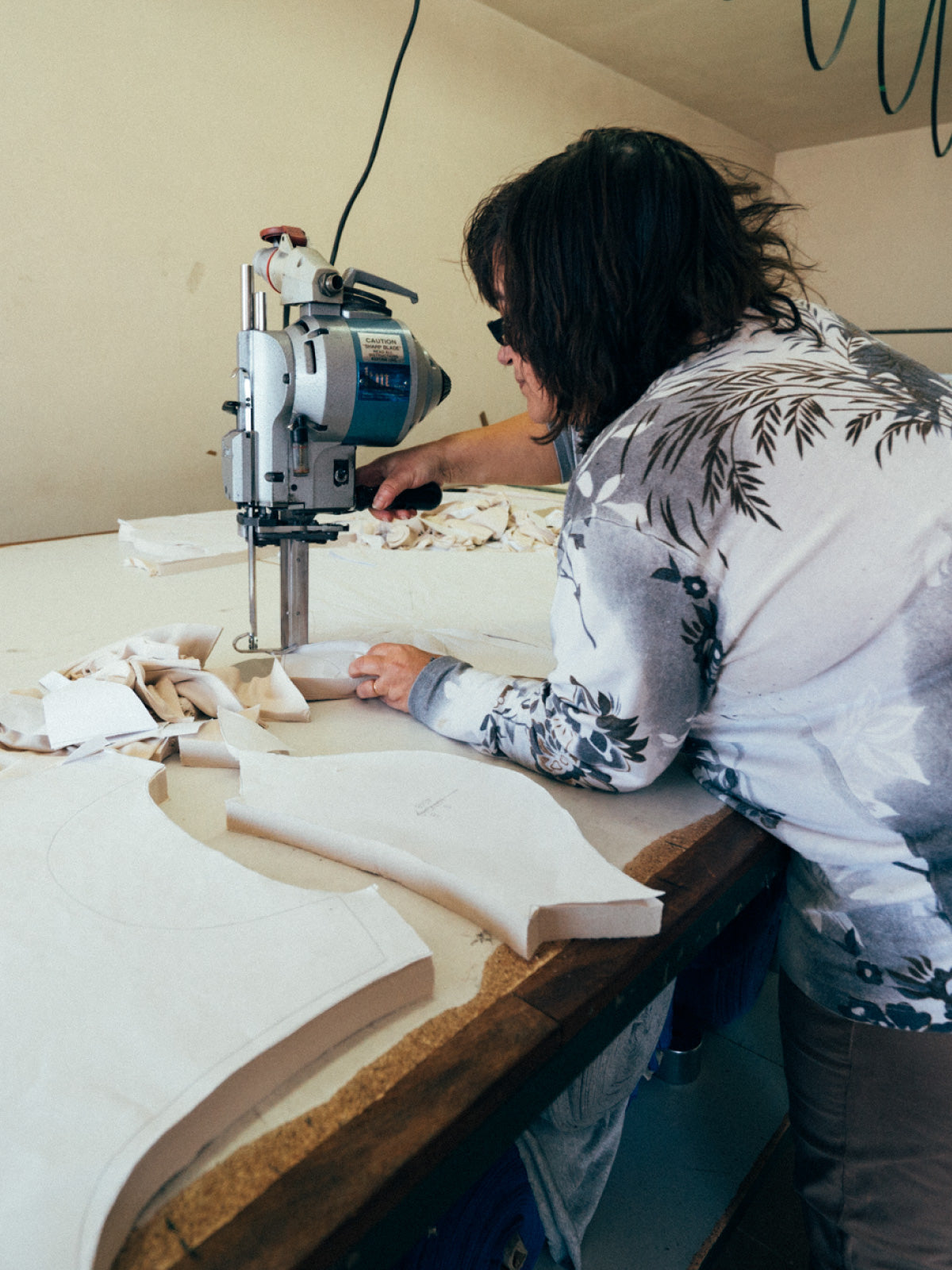
For cutting the fabric—the next step in the production process—templates are needed. These are created based on our cutting specifications, then printed and arranged on the fabric as efficiently as possible so that waste is kept to an absolute minimum.
In a small family-run workshop, the templates are placed on around 60 layers of fabric and then cut out precisely by hand (!). This step requires an exceptional amount of experience and is carried out by two sisters who make it look so easy that you can only marvel. They are specialists in their field, and it is a pleasure to see how much joy they still take in their work after so many years.
They also go all out when it comes to hospitality: whenever we visit, we are always treated to excellent port wine, which can certainly make it tempting to stay far too long…
In the first step, the wood is processed into small chips and mixed with an organic solvent so that the cellulose dissolves. Because it mixes well with water, this solvent can be recycled again and again.
After this first step, you have a honey-like mass, which is then pressed through spinnerets to produce fine fibers. The fibers are subsequently dried and ultimately processed into the yarn that is knitted into the fabric of your T-shirt.
What we particularly like about this production step is that the entire process is a closed loop, which drastically reduces resource consumption and emissions.
Once the fabric is finished, it passes through various small workshops, where it is further processed with a great deal of handwork and attention to detail.
For cutting the fabric—the next step in the production process—templates are needed. These are created based on our cutting specifications, then printed and arranged on the fabric as efficiently as possible so that waste is kept to an absolute minimum.
In a small family-run workshop, the templates are placed on around 60 layers of fabric and then cut out precisely by hand (!). This step requires an exceptional amount of experience and is carried out by two sisters who make it look so easy that you can only marvel. They are specialists in their field, and it is a pleasure to see how much joy they still take in their work after so many years.
They also go all out when it comes to hospitality: whenever we visit, we are always treated to excellent port wine, which can certainly make it tempting to stay far too long…
SUSTAINABLE SHIRTS WITHOUT SCRATCHY LABELS
Scratchy labels in our shirts can cause skin irritation and discomfort. They distract us from what really matters: the shirt’s comfort and style. At wijld, we avoid scratchy and irritating labels by printing them directly onto the shirt.
This means you don’t have to go without any important information, while ensuring a smooth, comfortable wearing experience.
In addition to being comfortable, our sustainable shirts without scratchy labels are also environmentally friendly because we avoid using additional fabric. Minimalist and functional!
That means you’re not only dressed comfortably but also in an environmentally conscious way.
CLOTHING MADE FROM WOOD WITH LOVE
For us, it’s not only fascinating to see how quickly and precisely the work is done—it’s especially wonderful to see HOW it is done. So much energy and attention to detail go into our wooden clothing at every single stage of production.
But how do you like the result? Your opinion is, of course, extremely important to us! What do you think of our WoodShirts? Are you satisfied or even delighted, and have we succeeded in offering you a genuine, eco-friendly, and fair alternative that you enjoy wearing or giving as a gift? We want you to be completely satisfied and, of course, are delighted by every recommendation to friends and family! ;-)