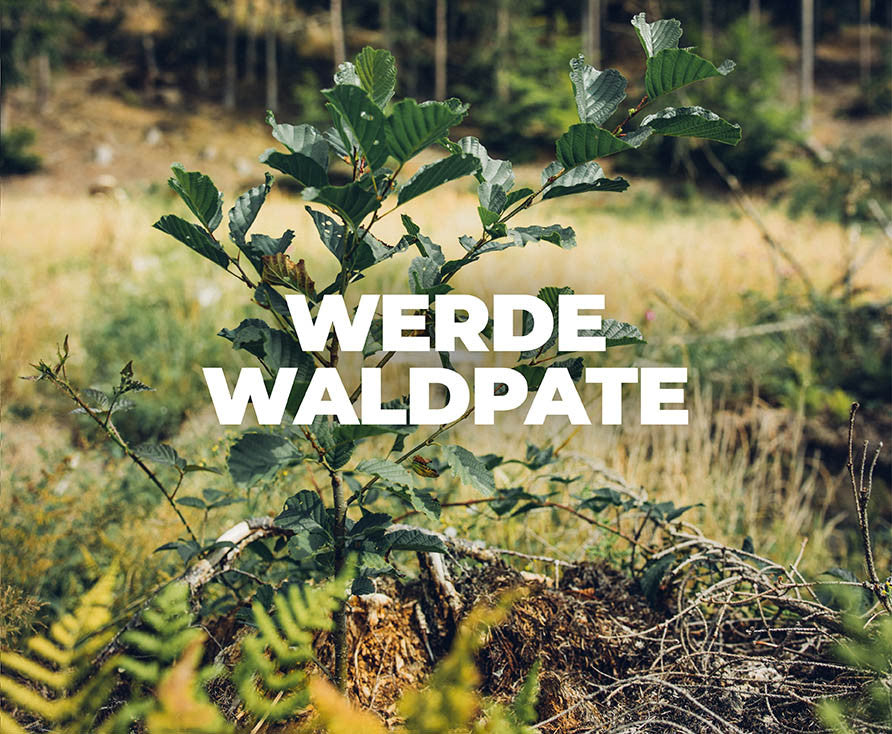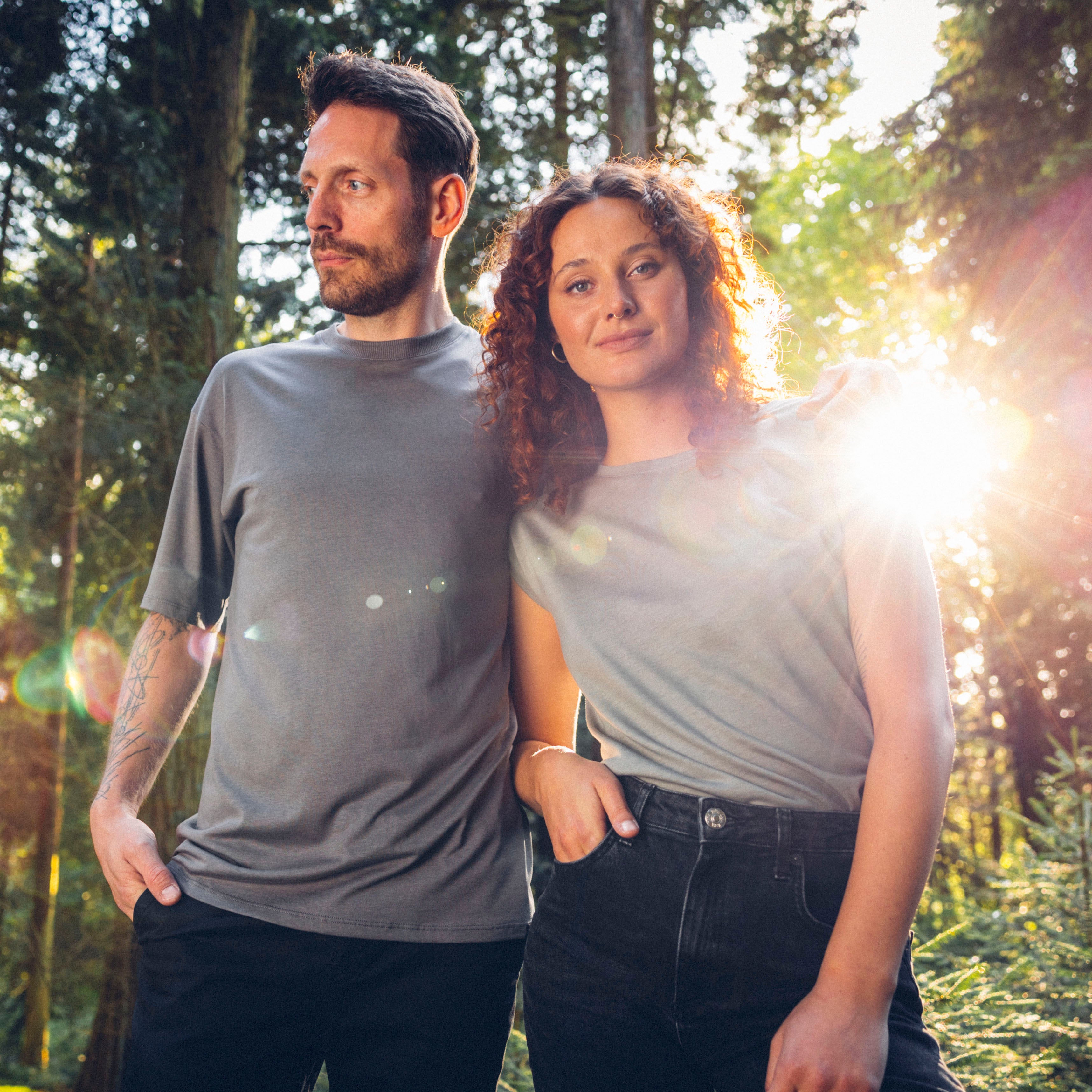



With every order on wijld.com, we protect a piece of forest.
To this end, in 2022 we bought our own piece of forest in the Sauerland region and want to restore an ecologically valuable habitat in a section of forest damaged by climate change.
PLANT TREES & PROTECT FORESTS
Climate change has a firm grip on us and is making things increasingly difficult for our native forests. That’s why we want to help and have launched a project to support Germany’s forests.
In 2021, we put out feelers and reached out to find a damaged section of forest we could take care of. And sure enough! After a long search, many conversations, and numerous appeals, we found it: our future wijld forest. Covering more than 81,000 m², this still rather barren woodland in the Sauerland near Marsberg is just waiting to be planted and restored to its natural state!
PLANT A PIECE OF FOREST WITH EVERY ORDER ON WIJLD.COM
And this is where you come in, because this passion project can only be achieved together, and with every order on wijld.com, you help protect a small piece of forest along the way. Each order contributes exactly 0.6 m² of forest area, which we will reforest and care for in order to create a healthy forest one day. This task will not be easy—it is truly a major undertaking. Creating a healthy ecosystem requires a great deal of planning, time, and patience. For an area of 8.1 hectares, we currently anticipate planting around 10,500 trees. However, the number may vary slightly depending on how many large and small tree species we need for a well-balanced mixed forest. Before each planting, we must also carefully assess which primary and secondary tree species are suitable for the location and will provide the greatest long-term benefits for nature and the environment.
But just imagining that our forest, once it has grown large and strong, could absorb up to 81 tonnes of CO² every year fills us with joy and motivation to get planting!


100,000 TREES FOR MEXICO
It is especially important to us that everyone can actively contribute and experience the progress of our reforestation and restoration efforts. That is why we want to enable anyone interested—as well as school classes and forestry students—to accompany Waldemar during its creation and help shape our project.
However, our forest in the Sauerland is only the first of many more forests we want to protect. Our long-term goal is to save as many forest areas as possible that have been affected by the climate crisis and destroyed by environmental damage. This is also why we came up with the idea of speeding up our work through forest sponsorships and together with you—not only protecting the first 8.1 hectares of forest for the future, but also acquiring and restoring additional areas as quickly as possible. After all, together we can always achieve more.
WHY A HEALTHY FOREST IS SO IMPORTANT
Did you know that the term “sustainability” originated in forestry? Due to an increasing shortage of wood across regions, modern forestry emerged in the early 18th century and replaced the uncontrolled exploitation of forests that had prevailed until then. The basic idea of sustainable forestry can therefore be summed up as follows: only as much wood should be used as can naturally regrow. Sustainable forestry also ensures that newly planted trees do not form monocultures, which are more susceptible to pests, harm the soil, and deprive animals of their habitat.
But how can we plant trees while also using wood for, for example, clothing? Although this may seem contradictory at first, it makes much more sense once you understand the background:
Processing trees is actually both right and important. When a tree is in its prime, it produces oxygen, provides a habitat, and stores CO². With trees from sustainable forestry, the main aim is to make optimal use of the CO² stored in them, which is why they are only felled after many years. If this did not happen, many of them would die due to a lack of light or fungal infestation, among other causes, decompose, and release the stored carbon back into the air. The felled trees therefore serve as a long-term CO² storage system and are also perfectly suited for use as an environmentally friendly material in a wide range of areas.